The Geek Side Of A High Five
ReliableReads Editorial Team
Destination 4 Education
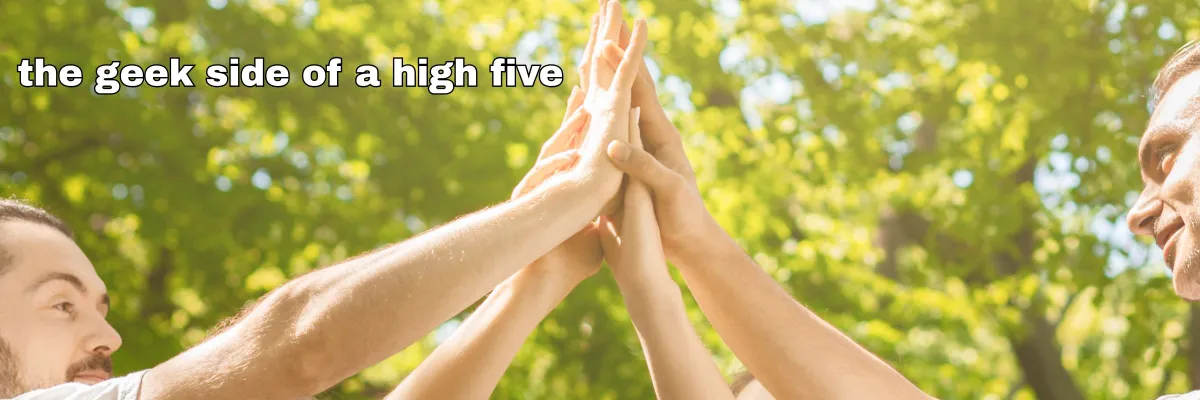
A high five looks simple on the outside. Two hands meet, there is a quick sound, and the moment is over. But that small gesture carries real weight. A high five is positive affirmation in physical form. It communicates encouragement, support, and shared celebration in a way that is hard to miss.
What makes a high five different from a spoken compliment is that it is both social and physical. It is not only a message. It is an experience. Touch, timing, and mutual participation combine to make it feel personal, immediate, and real.
A High Five works in the brain and body
A high five is a powerful social interaction because it can influence how the body and mind feel in the moment. Positive touch and shared connection are linked with chemical responses that support well-being. People often associate high fives with oxytocin and endorphins, which are connected to bonding, comfort, and an uplift in mood.
The effect is not only emotional. When people feel supported, the brain is more likely to move out of “defensive mode” and into a more open, engaged state. That is why a well-timed high five can help someone reset after stress, bounce back after a mistake, or stay focused through a tough stretch.
Teamwork and cooperation
High fives can boost teamwork because they act as a visible signal of trust. When two people high five, they reinforce alignment: same goal, same side. In group settings, those signals matter. Teams are built through repeated moments of coordination, not just meetings and plans.
A high five also marks progress. It tells the brain, “That mattered.” When teams notice and celebrate small wins, they often build momentum. Momentum keeps people engaged and can translate into better performance over time.
Stress relief through connection
Stress shows up in the body as much as the mind. It affects breathing, attention, and patience. A high five is a quick way to interrupt that pattern. Positive social touch can help people feel calmer and less alone, which is often the real issue underneath stress.
A high five creates a fast reminder that support is present and that the person is not carrying the load alone.
Mood and motivation
High fives can improve mood because they pair recognition with a reward signal. Many people link high fives with dopamine, a neurotransmitter associated with motivation and pleasure. In everyday life, the pattern is easy to see: when effort is met with immediate acknowledgment, people feel encouraged to keep going.
That is why high fives work in sports, but they also work in homes, workplaces, and classrooms. Recognition increases energy. When energy rises, people are more likely to stay engaged, optimistic, and resilient.
Relationships and belonging
A high five is also a form of appreciation that does not require a long conversation. It says, “I value you,” in a light, natural way. Over time, those small acknowledgments build closeness and belonging. They create a pattern of positive interaction that people can rely on.
High fives and leadership
High fives matter in leadership because leaders set the emotional tone. Strong leaders do more than give direction. They reinforce behavior, recognize effort, and create psychological safety. A high five is a fast, visible form of recognition that tells someone their effort counted, and it signals, “I’m with you.”
In many environments, people hear more correction than encouragement. That imbalance drains morale. High fives help restore balance. They are small, consistent moments of positive reinforcement that shape culture, because culture is built by what gets noticed and celebrated in real time.
A High Five can be stronger than words
Research on social touch suggests that touch can communicate emotion clearly, sometimes when words feel limited or awkward. That helps explain why a high five can feel more powerful than a quick compliment, especially when someone is tired, anxious, or unsure. The gesture is not just heard. It is felt, and that can make the message stick.
Your takeaway
The act of a high five might seem spontaneous, but underneath it is an interplay of sensory input, emotional meaning, and social bonding. From stress relief to teamwork, from mood to leadership, the high five shows how small gestures can produce real impact.
In a world that often feels rushed or disconnected, a high five is a reminder that connection does not have to be complicated.
Sometimes the smallest moment is the one that makes people feel seen, supported, and helps them to keep going.